$1,000 to $3,000
Garage or closet only
- Concrete floor
- Clean water
- Short drying
A tank that fails can empty dozens of gallons across a garage or closet floor, and the water soaks drywall and flooring nearby. Crews extract it, dry the walls and floors and document the loss.
(888) 527-9134Dry out after the tank leak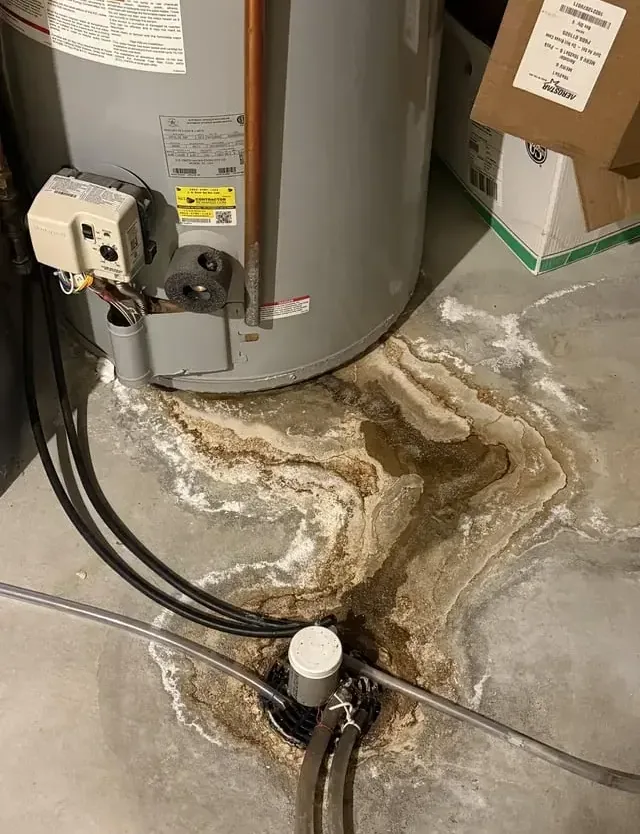
Cut the water supply and power to the heater before anyone steps into the wet area.
Wet vacuums and extractors clear the garage, closet or hall of every pool.
Baseboards and drywall near the heater are tested and opened if they hold moisture, and cut when readings stay high.
Equipment runs until readings are normal, and photos support the claim.
Water on concrete is extracted fast, and stored items are lifted to avoid damage.
Drywall beside the heater is checked and cut when it holds water.
Water that crosses into living space is extracted and the flooring is dried or replaced.
A long weeping leak is traced with meters because stains rarely show the full wet area.
A tank leak caught in the garage costs far less than one that soaked a ceiling below or ran for days. Size of the area, flooring type and how long the water sat set the tier, and a written scope follows the first meter readings. Catching the leak early is the best way to avoid a ceiling or flooring replacement.
Ranges are typical, not a quote: the water category, the square footage, the material class and how fast drying started move the number most. For a planning figure on your own loss, try the water damage cost calculator.
Water and power to the heater are shut off, and the crew sizes up the wet footprint, then the area is photographed for the file.
Extractors clear the floor and wet vacuums pull water from corners and thresholds.
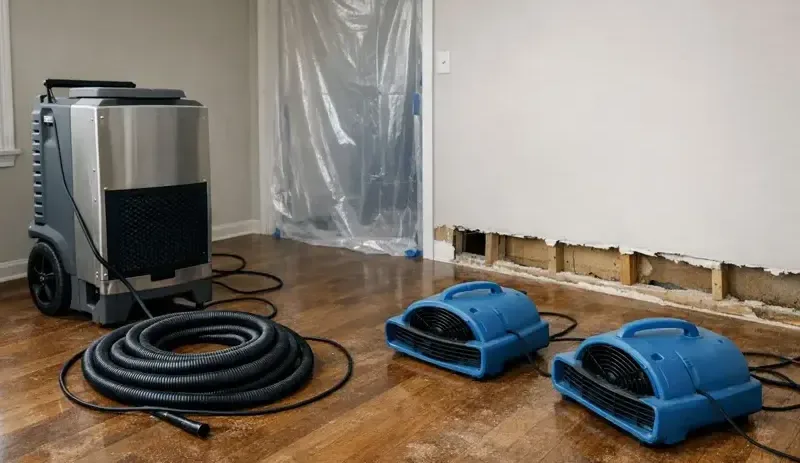
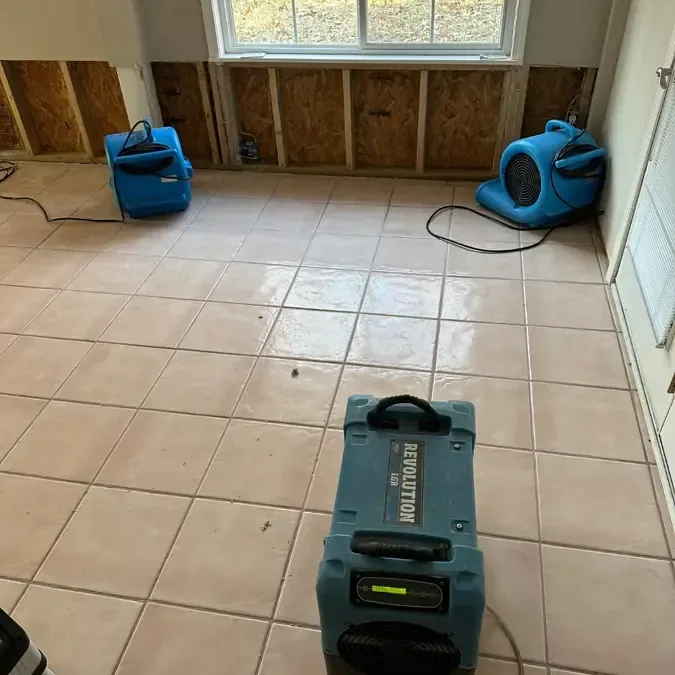
Air movers and dehumidifiers dry the slab, trim and walls, and extra mats go under carpet if needed, so the drying equipment has dry ground to work on.
Readings confirm everything is dry, and photos and logs finish the file and the final report is handed over.
Water heaters fail slowly or all at once. A rusted tank can seep for weeks, while a split seam can release most of the tank in minutes. Either way, the water spreads across the floor and wicks into the walls beside the heater, where it can stay hidden behind baseboards.
The crew shuts off the water supply and power to the heater, extracts what is on the floor and uses meters to find wet drywall and trim. Garage slabs dry quickly, while carpet and closet walls need more work. Air movers and dehumidifiers finish the job, with readings checked until the area is dry.
Single-family homes here often keep the heater in a garage or utility closet attached to living space. Water that crosses the threshold reaches carpet, wood and cabinets, and a slow seep can be the source of staining long before anyone notices. Early drying keeps the job small.
A plumber replaces the heater, and restoration makes sure the area is dry first. When water ran into a kitchen or hallway, appliance leak water damage shows how the drying differs. A fresh unit is easier to trust once the wet area has been checked.
Water heater leak cleanup covers Lucas homes across the city, from The Estates at Austin Trail to Glenbrook Estates and the streets near Country Club Road. The same moisture log is kept for every job.
The same service nearby: water heater leak cleanup in Princeton, Fairview, Wylie.
This town's water damage hub · every town coveredTurn off the water supply and the power or gas control, keep people out of the water and call for extraction. Do not touch the tank while standing in water.
Yes. A slow leak can soak a wall base or subfloor for weeks, and the stains seldom show the whole wet area. A moisture meter finds what the eye misses.
It starts clean, but it can pick up dirt and debris on a garage floor, which is why fast cleanup matters. Treat it as unsanitary until the floor is cleaned.
Surface water evaporates, but moisture in adjoining drywall and trim does not, so meters are used to check. Hidden wetness raises odor and staining risk.
The tank should be shut down immediately. Replacement can happen while drying continues. Delays only add water and extend the drying time.
Photos of the tank and the wet area, moisture readings and equipment logs all help your insurer.
Tank water travels under doors and into walls. Call, describe where it ran and get the floor and walls extracted and dried.