$3,000 to $10,000
Small office or suite
- Extraction and drying
- After-hours setup
- Three to five days
24/7 commercial water damage restoration in Princeton. The commercial drying team extracts water from shops, offices and restaurants, works around business hours where possible and dries the space to the IICRC S500 standard.
(888) 527-9134Business taking on water? Phone now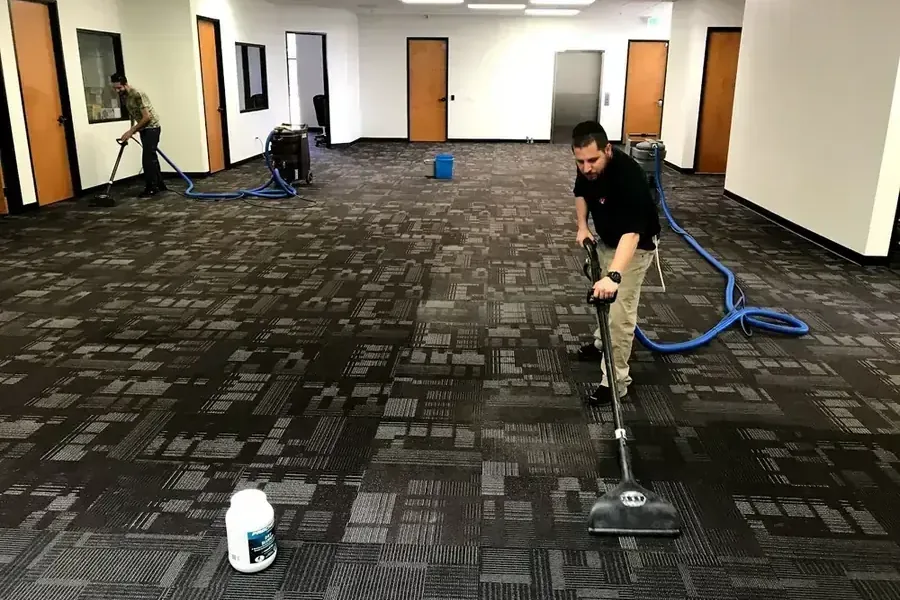
Close the main or the fixture valve, and cut power to wet areas from a dry panel.
Move staff and customers out of wet areas and lift inventory, files and electronics off the floor.
Tell the landlord or property manager; shared walls and roofs often mean shared responsibility.
Record the source, the wet areas and damaged stock with timestamps for the claim.
The response team works after hours and overnight, so drying can start before the next business day.
Larger spaces get equipment sized to the load, with phased drying behind containment.
Moisture maps, daily logs and removed-material records for the owner, tenant and insurer.
Retail, restaurant and office spaces along the main corridor are routine commercial work here.
In Princeton, TX, commercial water damage typically runs $3,000 to $10,000 for a small office or one suite, and $10,000 to $35,000 for a restaurant or a retail floor with flooring and wall removal. Large spaces or Category 3 losses can reach $35,000 to $100,000. Square footage, category and how much of the space must close set the number.
Ranges are typical, not a quote: the water category, the square footage, the material class and how fast drying started move the number most. For a planning figure on your own loss, try the water damage cost calculator.
The tech who does the walkthrough maps the wet area and the source, then plans which sections can stay open and which close for drying.
Truck-mounted and portable extraction units clear standing water, and wet stock and materials are moved or removed.
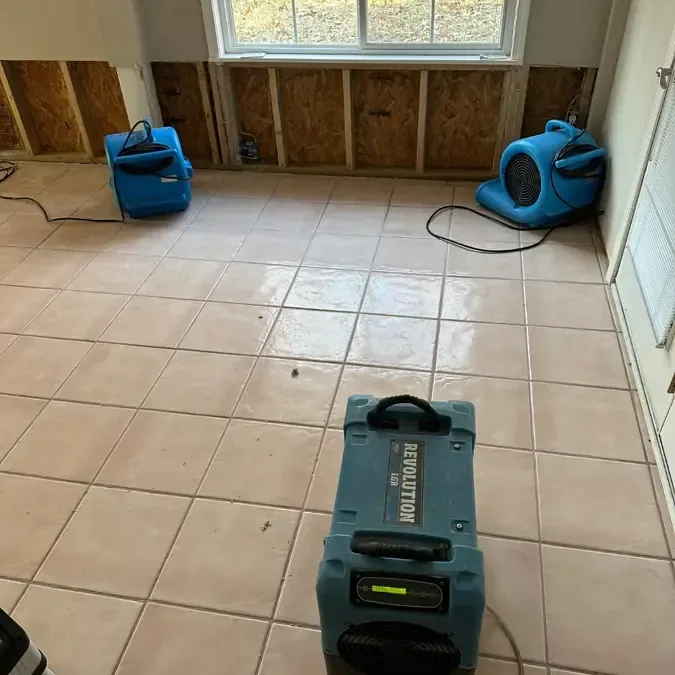
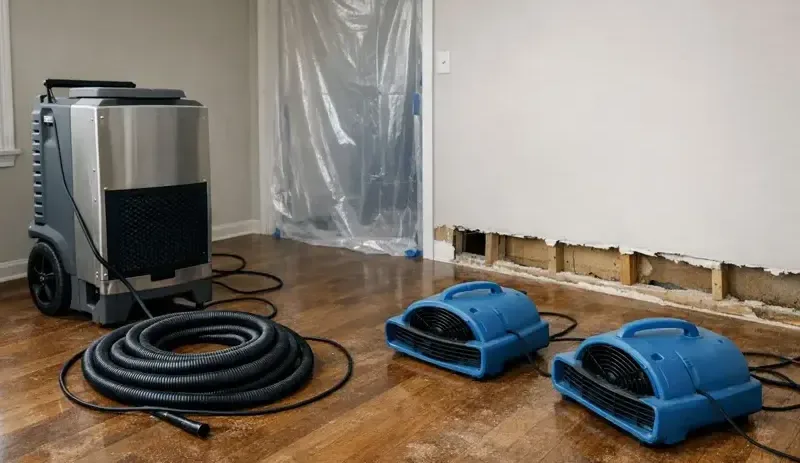
The commercial drying team sets air movers and dehumidifiers behind containment, so drying runs while other areas keep working.
Daily readings, photos and removal records are compiled, and each area is released once it reaches the drying goal.
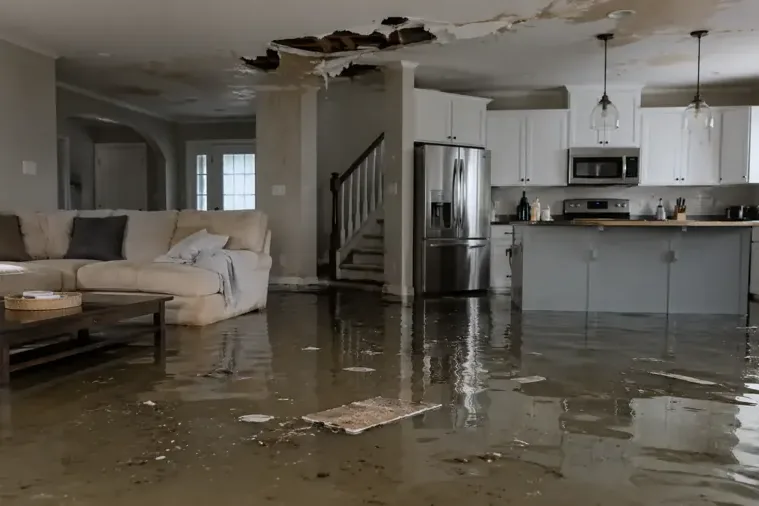
For a business, water damage is two problems at once: the wet building and the closed doors. A plan that dries the space fast, keeps part of it open where safe and documents everything for the property owner, the tenant and the insurer matters as much as the equipment.
The commercial heart of town sits at US 380 and Princeton Road, where retail, restaurants and offices share buildings and roofs. With Princeton among the fastest-growing cities in the country, many of those spaces are new, but water still finds them:
The commercial drying team extracts with larger truck-mounted and portable units, then maps moisture in floors, walls and ceiling spaces. Drying is phased where possible, so a section of the space can reopen while another dries behind containment. Restaurant losses from floor drains or sewage are handled as Category 3, and storm water at the door follows the storm flood cleanup process. Every day of drying is logged under the same structural drying standard used in homes.
Know where the main water shut-off and the sprinkler control valve are before anything happens, whether the space sits on US 380 or in a newer Collin County development. Ready.gov business preparedness covers continuity planning, and OSHA covers worker safety during cleanup in wet and contaminated spaces.
The restoration crew works all of ZIP 75407, from the Arcadia Farms streets and the newer subdivisions off US 380 to the older homes along FM 982 and FM 546 on the southern edge of town.
Nearby coverage reaches McKinney, Farmersville, Lowry Crossing, Fairview, Lucas, Melissa.
See every part of Princeton coveredOften partly. Phased drying behind containment lets some areas reopen while others dry, as long as the space is safe for staff and customers.
Water from floor drains or sewage is Category 3, so porous materials it touched are removed and surfaces are treated with an EPA-registered antimicrobial.
A fire protection contractor repairs and restores the system. The commercial drying team extracts and dries the space.
Most commercial jobs dry in three to five days. Large spaces, concrete and Category 3 losses take longer.
Commercial property policies often cover sudden water damage, and some include business interruption. Coverage depends on your policy, so check with your own insurer.
Most commercial jobs here run $3,000 to $35,000. The cost calculator gives a planning range.
Every closed day costs money. A phased drying plan and full documentation get the space back to work.