$1,500 to $4,500
One or two rooms
- Extraction and drying in place
- Small access openings
- Three to five days
24/7 burst pipe water damage cleanup in Princeton. The water damage restoration experts extract what the split line released, open walls and ceilings only where readings point, and dry the framing and drywall to the IICRC S500 standard.
(888) 527-9134Pipe split in the wall? Phone now
Shut the main valve at the meter box or where the supply enters the house, then open a low faucet to drain the lines.
Switch off breakers for wet rooms and for any ceiling light under the leak, from a dry panel.
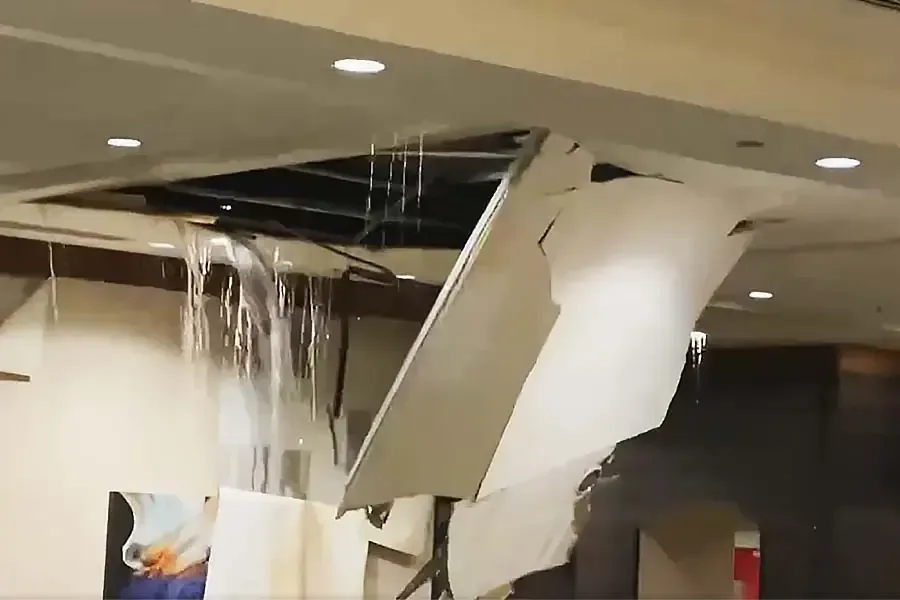
Put buckets under ceiling drips and poke a small hole in a bulging ceiling to let water out in one spot.
Photograph the split pipe, the wet walls and the floors before anything is moved or opened.
The response team works across Princeton day and night, so extraction starts before water reaches more rooms.
Wall and ceiling cavities are dried with directed air, not just the room around them.
The break, the wet areas and daily readings are recorded for the adjuster and the plumber.
Attic supply lines, two-story ceilings and slab floors are routine in local homes.
In Princeton, TX, burst pipe water damage typically runs $1,500 to $4,500 when water stayed in one or two rooms, and $4,500 to $10,000 when it came through a ceiling or spread under flooring across several rooms. A long-running break that soaked two floors can reach $10,000 to $20,000. How long the pipe ran sets most of the number.
Ranges are typical, not a quote: the water category, the square footage, the material class and how fast drying started move the number most. For a planning figure on your own loss, try the water damage cost calculator.
Once the valve is closed, the extraction crew pulls standing water off floors and out of carpet so the walls stop wicking more of it.
Thermal imaging and meters trace water inside walls and ceilings, so openings go only where the readings show moisture.
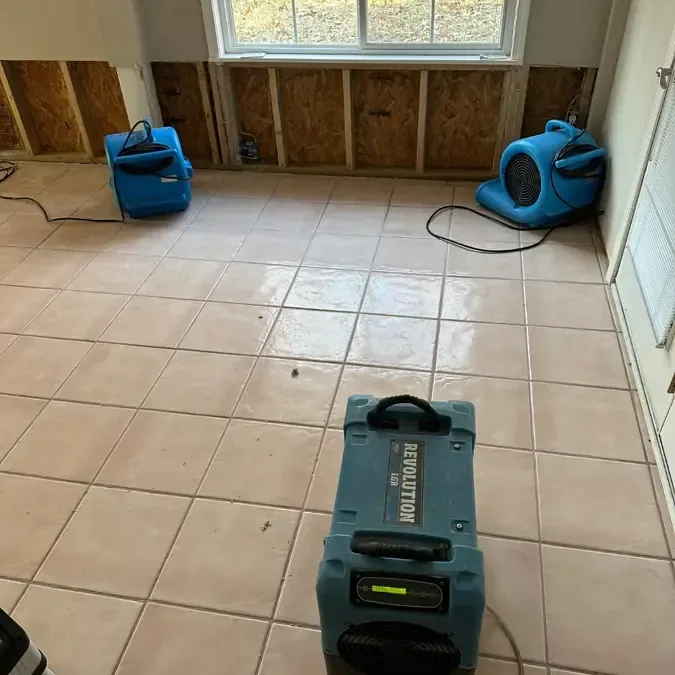
The drying team removes the wet lower drywall or drills access holes, then directs air movers and dehumidifiers into the framing.
Daily readings run until the framing reaches the drying goal, and the moisture log goes to the plumber, the rebuild crew and the adjuster.
A burst supply pipe releases pressurized water until someone closes the valve. In a two-story house it soaks the wall cavity, runs along the floor framing and comes through the ceiling below; on one story it spreads across the slab under flooring and into the next room.
Most homes built in the 2010s and 2020s across Princeton use plastic supply piping, run through walls, ceilings and often the attic. Failures cluster where those lines are stressed or exposed:
Water inside a wall cavity stays hidden. The extraction crew removes standing water first, then thermal imaging and pinless meters show how far it climbed. Instead of tearing out whole walls, the drying team opens small access holes or removes the wet lower strip, and directs air into the cavity. When the break came from a cold snap, the frozen pipe water damage page covers the differences, and a pipe in the floor is a slab leak.
Knowing where the main shut-off sits saves the most water. Ready.gov winter weather guidance covers protecting pipes before a hard freeze, and EPA WaterSense explains checking fixtures and connections for leaks. On Collin County homes, attic lines deserve a look before both the summer heat and the first January freeze.
The restoration crew works all of ZIP 75407, from the Arcadia Farms streets and the newer subdivisions off US 380 to the older homes along FM 982 and FM 546 on the southern edge of town.
Nearby coverage reaches McKinney, Farmersville, Lowry Crossing, Fairview, Lucas, Melissa.
See every part of Princeton coveredClose the main shut-off, turn off power to wet rooms from a dry panel and open a low faucet to drain the lines. Then call, because burst pipe water keeps moving inside walls after the valve is shut.
Usually not entirely. Moisture mapping shows how high water climbed. Often only the lower strip of drywall or small access holes are needed to dry the cavity.
Most burst pipe losses dry in three to five days. Water that came through a ceiling or soaked hardwood can take a week or more.
A sudden, accidental burst is commonly covered, while a slow leak may not be. Coverage depends on your policy, so check with your own insurer.
Not every break is a freeze. Fittings fail, connections loosen and lines in hot attics age faster. The plumber finds the cause; the restoration team dries what it soaked.
Most burst pipe jobs here run $1,500 to $10,000 depending on spread and materials. The cost calculator gives a planning range.
Water inside drywall stays hidden. Thermal imaging and a moisture map find it before it reaches the next room.