$900 to $2,800
Around one appliance
- Extraction and toe kicks
- Flooring dried in place
- Two to four days
24/7 appliance leak water damage cleanup in Princeton. The local restoration pros extract water from washer, dishwasher and refrigerator failures, dry the cabinets and flooring around them and document the loss for the claim.
(888) 527-9134Washer or dishwasher flooded? Phone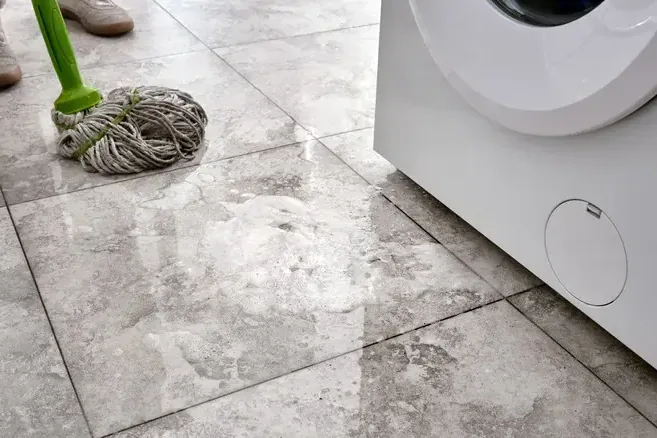
Close the valve behind the washer, under the sink or behind the refrigerator, or the main if it will not turn.
Unplug the appliance only if the outlet and floor around it are dry; otherwise switch off the breaker.
Move rugs, laundry and items from lower cabinets so the wet area is easy to reach.
Capture the failed hose or seal, the appliance label and the wet floor before cleanup.
The response team works day and night, so water is out from under cabinets before particleboard swells.
Cabinet bases and flooring are dried to readings, with toe kicks opened instead of cabinets torn out.
The failed part, the wet area and daily moisture logs are recorded for the adjuster.
Slab kitchens, laundry rooms and second-floor laundry in new Princeton builds are routine work here.
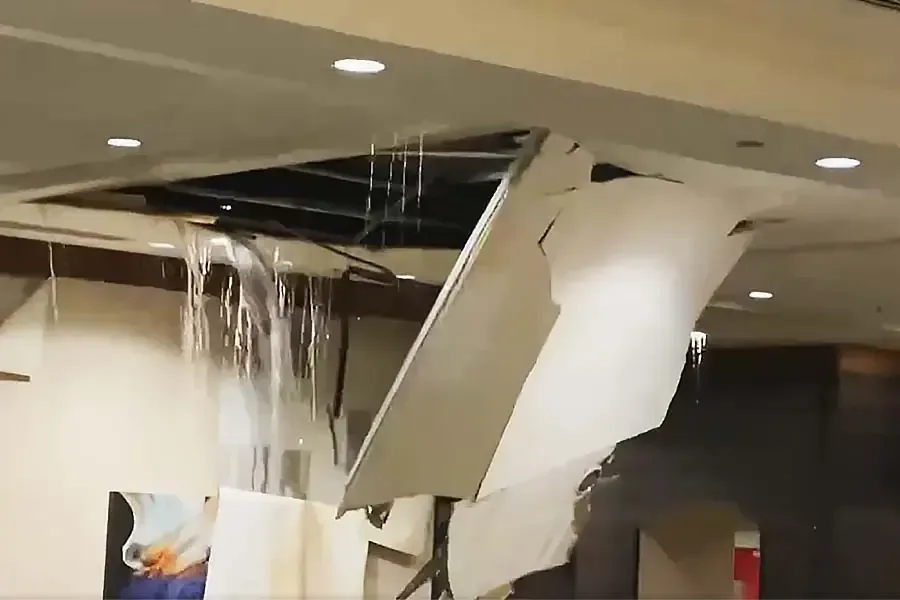
In Princeton, TX, appliance leak water damage typically runs $900 to $2,800 when the water stayed around one appliance and was caught early, and $2,800 to $6,500 when it ran under cabinets and flooring across the kitchen or laundry. An upstairs washer that soaked a ceiling and two floors can reach $6,500 to $12,000.
Ranges are typical, not a quote: the water category, the square footage, the material class and how fast drying started move the number most. For a planning figure on your own loss, try the water damage cost calculator.
The tech who does the walkthrough confirms which appliance failed and sets the category, since drain water is handled as Category 2.
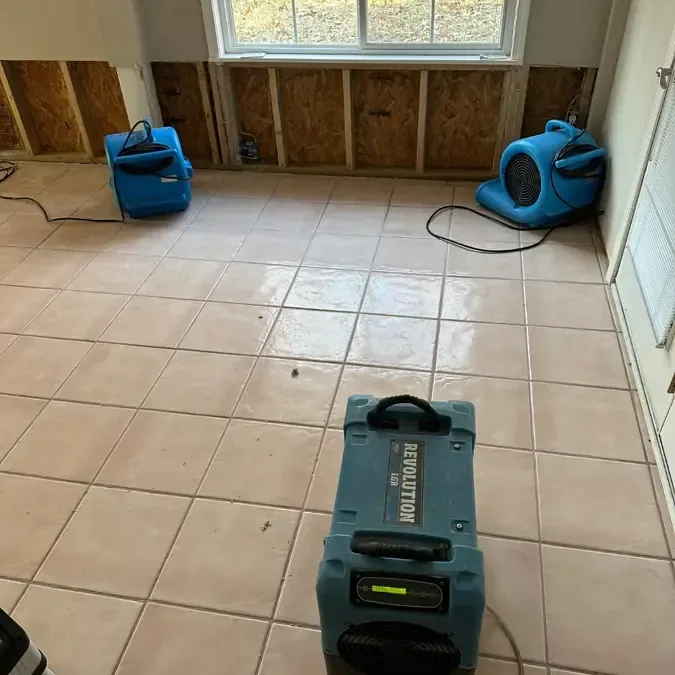
The extraction crew pulls water off the floor, then toe kicks and baseboards come off so meters can read under the cabinets.
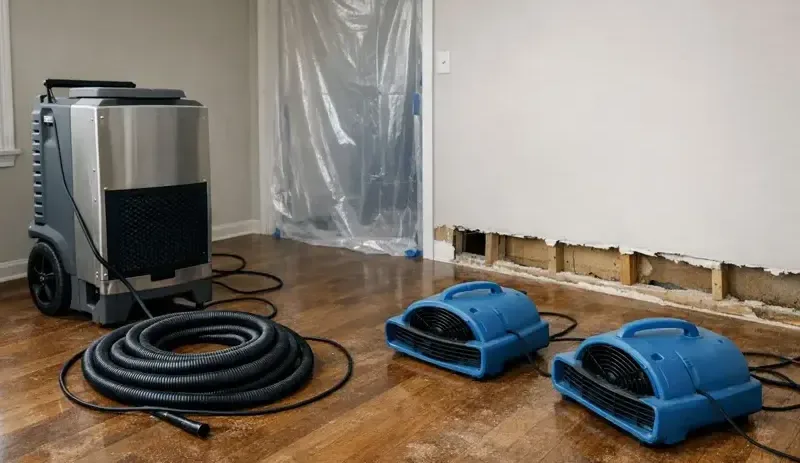
Air movers, cabinet drying systems and LGR dehumidifiers dry the subfloor, cabinet bases and wall bottoms together.
Readings are logged daily, and the appliance goes back only after the floor and cabinets reach the drying goal.
In Princeton kitchens and laundry rooms, appliances leak where nobody looks: behind the washer, under the dishwasher and inside the wall behind the refrigerator. The water runs under cabinets and vinyl plank long before it shows at the edge of the floor, so the wet area is usually larger than the puddle.
In the 2010s and 2020s homes that fill Arcadia Farms and the streets off US 380, kitchens and laundry rooms sit on the slab with flooring floated or glued right over the concrete. Water from an appliance spreads in a thin layer under that flooring and into cabinet bases. The usual sources:
The extraction crew removes standing water, then pinless meters map how far it ran under cabinets and flooring. The drying team pulls toe kicks and baseboards, drills or vents cabinet bases where needed and sets air movers and LGR dehumidifiers. Washer and dishwasher water is usually Category 2, so soaked porous materials are cleaned or removed rather than simply dried. When an upstairs washer comes through, the ceiling leak page covers that side, and a heavy flood across the first floor calls for emergency water removal.
Braided steel supply hoses, a washer pan with a drain and a quick look behind appliances twice a year stop many leaks. EPA WaterSense covers leak checks around the home, and the Texas Department of Insurance explains how homeowner water claims are handled in Collin County and across the state.
The restoration crew works all of ZIP 75407, from the Arcadia Farms streets and the newer subdivisions off US 380 to the older homes along FM 982 and FM 546 on the southern edge of town.
Nearby coverage reaches McKinney, Farmersville, Lowry Crossing, Fairview, Lucas, Melissa.
See every part of Princeton coveredWater from an appliance spreads in a thin layer under vinyl plank, laminate and cabinet bases. Moisture meters usually find it well past the visible puddle.
Usually not. Opening the toe kicks and venting the cabinet bases lets the drying team dry them in place, unless particleboard has already swollen.
Water from a supply hose is Category 1. Water from the drain or the drum is Category 2, so soaked porous materials are cleaned or removed.
Most appliance leaks dry in two to four days. Water under hardwood or inside cabinets can take longer.
A sudden failure is commonly covered, while a slow drip over months often is not. Coverage depends on your policy, so check with your own insurer.
Most appliance leak jobs here run $900 to $6,500. The cost calculator gives a planning range for your rooms.
Water under cabinets and flooring keeps spreading out of sight. Moisture mapping finds it before particleboard swells.