$2,000 to $5,000
One room, caught early
- Flooring lifted in one room
- Baseboards off
- Drying mats on the slab
24/7 slab leak water damage restoration in Princeton. The mitigation team traces the wet area with thermal imaging, lifts only the flooring that has to come up and dries the slab, cabinets and wall bottoms to the IICRC S500 standard.
(888) 527-9134Floor warm or lifting? Phone it in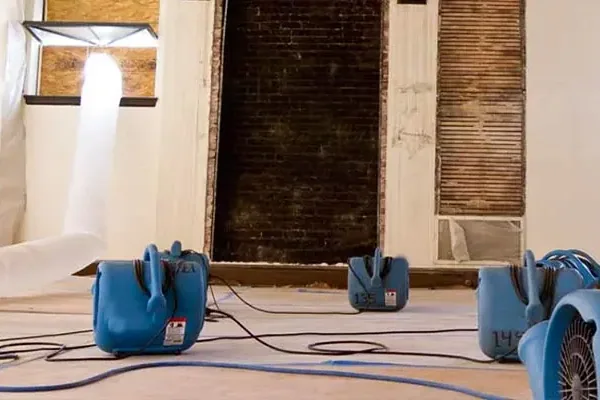
Stopping the supply stops the slab from soaking further while the leak is located.
With every fixture off, a moving dial confirms water is escaping somewhere in the system.
Move rugs, furniture and boxes off damp carpet or lifting flooring so it can be opened up.
Capture warm spots, cupped boards, stains and the meter reading for the plumber and the claim.
The response team covers 75407 around the clock, so drying starts as soon as the plumber has the leak isolated.
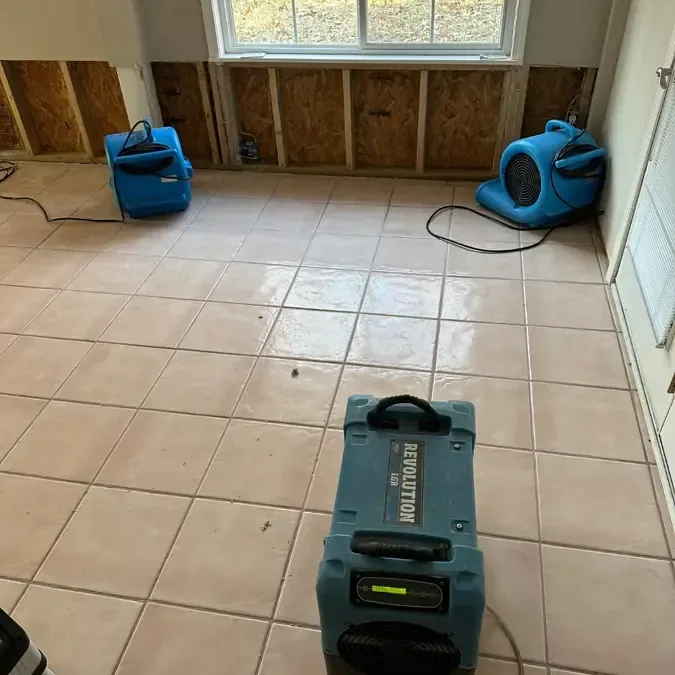
Concrete, flooring and wall bottoms are dried to readings with mats, desiccants and LGR units.
A moisture map of the slab, photos before flooring comes up and daily logs go to the adjuster.
Slab-on-grade homes over clay are the most common house type in town, and slab leaks are routine work.
In Princeton, TX, slab leak water damage typically runs $2,000 to $5,000 to dry one room caught early, and $5,000 to $12,000 when water spread under flooring through several rooms or into cabinets. A soaked slab with hardwood, a kitchen and a long-running leak can reach $12,000 to $25,000. The plumbing repair is billed separately.
Ranges are typical, not a quote: the water category, the square footage, the material class and how fast drying started move the number most. For a planning figure on your own loss, try the water damage cost calculator.
Thermal imaging and pinless meters show how far the water traveled across the slab, so only the flooring that has to come up is removed.
The mitigation team pulls baseboards, lifts carpet and pad and removes vinyl plank or wood that traps water against the concrete.
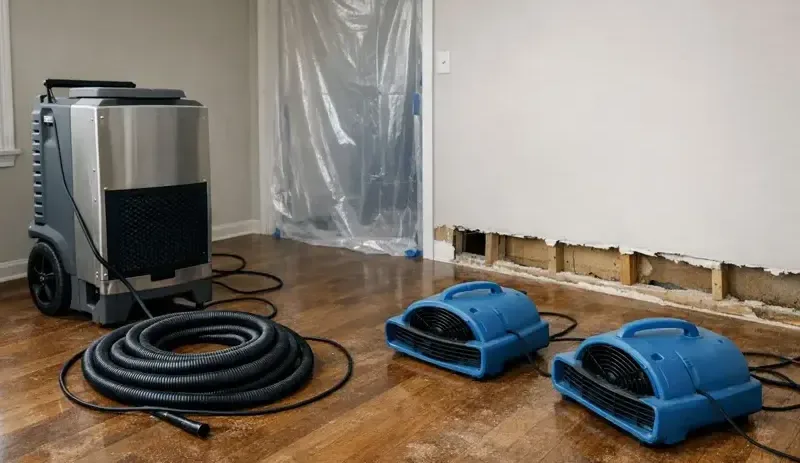
Drying mats, desiccants and LGR dehumidifiers pull moisture out of the concrete, while air movers dry the wall bottoms and cabinet bases.
Daily readings are compared with an unaffected part of the slab, and equipment stays until the wet areas match it.
A slab leak is a pipe failure in or under the concrete floor. The water has nowhere to go but up and sideways: into the pad under carpet, under vinyl plank and engineered wood, and into the bottoms of cabinets and walls. By the time a floor feels warm or lifts at a seam, the wet area is usually wider than it looks.
Collin County sits almost entirely in the Blackland Prairie, on deep clayey soils that swell when wet and shrink when dry. Most houses here, from Arcadia Farms to the subdivisions along US 380, were poured as slab-on-grade homes in the 2010s and 2020s, with supply and drain pipes running in or under the concrete. Ground movement stresses those pipes, and a leak can run for weeks before anyone sees it. The common signs:
A plumber locates and repairs the pipe; the restoration team handles the water it left behind. The drying team maps moisture across the slab, pulls baseboards, lifts or removes flooring that cannot dry in place and sets air movers, LGR dehumidifiers and, for concrete, drying mats or desiccants. The slab leak warning check walks through the signs, and the structural drying page explains the readings.
The meter test catches many slab leaks before the flooring does: shut off every fixture and watch the dial. EPA WaterSense Fix a Leak Week explains the test, and the Texas Department of Insurance explains how homeowner claims for water damage work. A slab leak caught early usually means less flooring lost and a shorter dry-out.
The restoration crew works all of ZIP 75407, from the Arcadia Farms streets and the newer subdivisions off US 380 to the older homes along FM 982 and FM 546 on the southern edge of town.
Nearby coverage reaches McKinney, Farmersville, Lowry Crossing, Fairview, Lucas, Melissa.
See every part of Princeton coveredCommon slab leak signs are a warm floor over a hot water line, damp carpet or lifting flooring with no visible source, a rising water bill and a meter that moves with everything off. A plumber confirms the leak location.
A plumber locates and repairs the pipe, by tunneling, breaking out the slab or rerouting the line. The restoration team dries the slab, flooring and walls the leak soaked.
Not always. Moisture mapping shows the wet area. Tile can sometimes stay while the slab dries around it, but carpet pad, vinyl plank and wood trapping water usually come up.
Concrete gives up water slowly. A slab soaked from below often needs five to ten days with drying mats or desiccants, longer for a leak that ran for weeks. Readings decide when the job is done.
Blackland Prairie clay swells when wet and shrinks when dry, and that movement stresses pipes in and under the slab. Most homes in town sit on that soil.
Many policies cover the sudden water damage from a slab leak and the cost to access the pipe, but not always the pipe itself, and long-term seepage is often excluded. Coverage depends on your policy, so check with your own insurer.
Most slab leak dry-outs here run $2,000 to $12,000 depending on rooms, flooring and how long the leak ran. The cost calculator gives a planning range.
Usually, yes. Drying equipment runs in the affected rooms while the rest of the house stays in use. The water may be off for a while during the plumbing repair.
Water under a slab spreads into flooring, cabinets and wall bottoms. The drying team maps it and dries the concrete.