$2,500 to $7,500
Garage or one room
- Pumping and mud removal
- Flood cut on walls
- Antimicrobial treatment
24/7 storm flood cleanup in Princeton. When heavy rain pushes runoff under garage doors and into first floors, the extraction crew pumps it out, removes what flood water ruined and dries the slab and walls to the IICRC S500 standard.
(888) 527-9134Storm water inside? Phone dispatch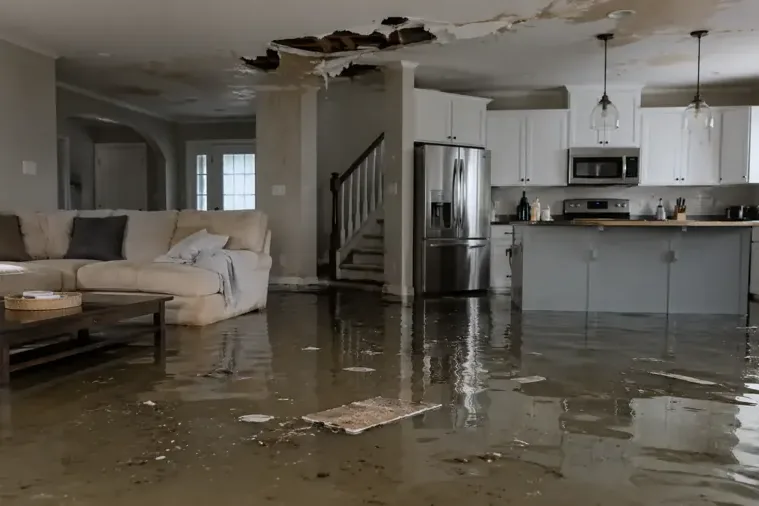
Do not wade through flowing water or into a flooded garage with power still on.
Switch off breakers to flooded areas from a dry panel; if the panel is wet, wait for an electrician.
Lift furniture, boxes and electronics out of the water's path and off garage floors.
Capture the high-water mark on walls, the mud on floors and the date of the storm.
Storm nights bring many calls; the response team works through them, pumping first.
Contaminated materials come out, surfaces are cleaned and treated, then the structure is dried.
The waterline, storm date, removed materials and daily readings are recorded for flood or home claims.
Runoff at garage doors and first floors on local slab homes is routine storm-season work.
In Princeton, TX, storm flood cleanup typically runs $2,500 to $7,500 when water stayed in a garage or one room, and $7,500 to $20,000 when it crossed the first floor and drywall and flooring came out. A whole ground floor or a business can reach $20,000 to $45,000. Category 3 removal and how high the water rose drive most of the cost.
Ranges are typical, not a quote: the water category, the square footage, the material class and how fast drying started move the number most. For a planning figure on your own loss, try the water damage cost calculator.
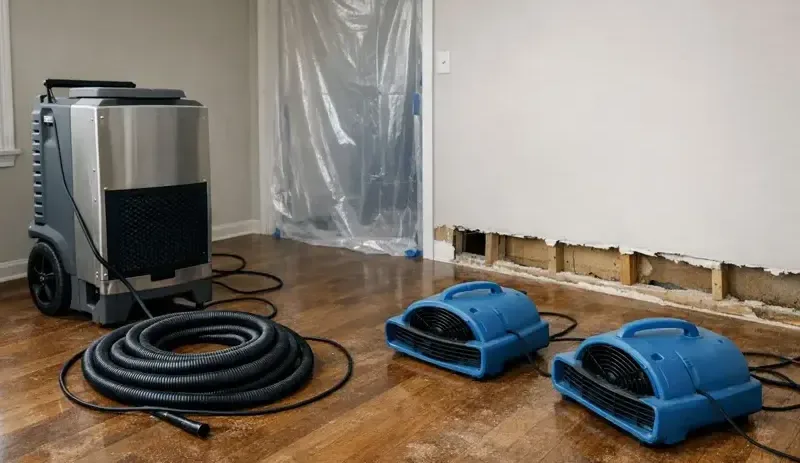
Submersible pumps and truck-mounted units remove standing water, then the extraction crew clears mud and debris from the slab.
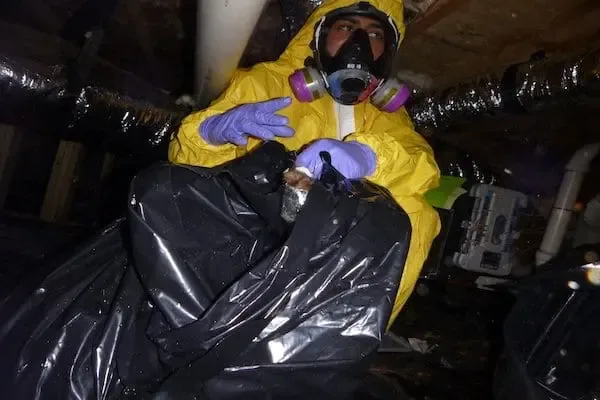
Because storm water is Category 3, the mitigation team removes carpet, pad and drywall it touched, with flood cuts above the waterline.
Remaining surfaces are cleaned and treated with an EPA-registered antimicrobial at its labeled dwell time before drying starts.
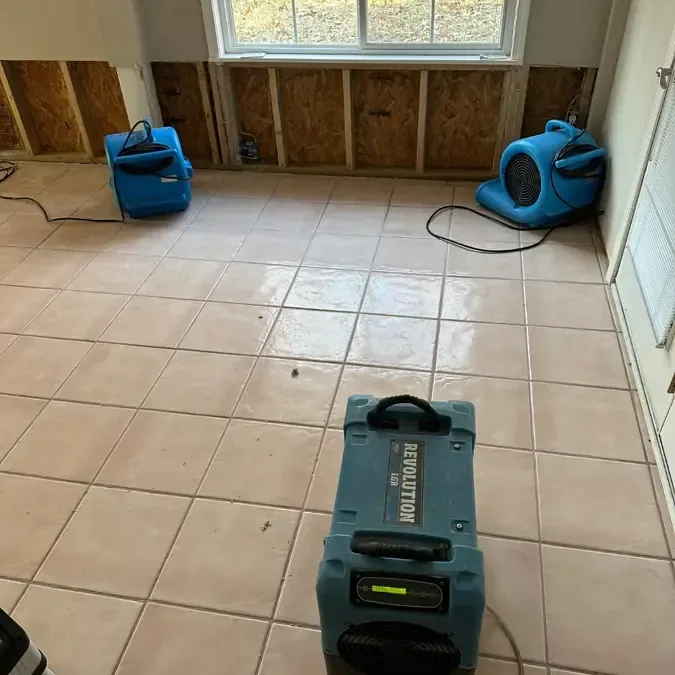
Air movers and LGR dehumidifiers dry the slab and framing, with daily readings until every material reaches the drying goal.
Storm flooding comes from outside: runoff that overwhelms the street drains and yard grading, then pushes under the garage door, through door thresholds and up against the slab. That water carries soil, lawn chemicals and whatever was in the street, so it is handled as Category 3 from the start.
Princeton's watershed begins with Tickey Creek, which carries the city's storm sewer runoff to Lavon Lake and on toward the Trinity River. The city notes that new development turns ground that once absorbed rain into roofs, driveways and streets, so more water runs off in each storm. Collin County has a long flood history of its own: in 1946 the county soil conservation district planned 144 flood-retarding structures, Lake Lavon among them, to protect the bottomland of southeastern Collin County. What that means for a house:
The extraction crew pumps and extracts standing water, then mud and debris come off the slab. Because flood water is Category 3, carpet, pad and drywall it touched are removed, usually with a flood cut a little above the waterline, and the remaining surfaces get an EPA-registered antimicrobial. Only then does structural drying start. Water that came from a toilet or drain instead of the yard is a sewage backup, and rain through the roof is a roof leak.
Standard homeowner policies usually exclude rising surface water; that is what flood insurance covers. FloodSmart, the National Flood Insurance Program explains flood policies, and the City of Princeton watershed protection page explains how local storm drains reach Tickey Creek and Lavon Lake.
The restoration crew works all of ZIP 75407, from the Arcadia Farms streets and the newer subdivisions off US 380 to the older homes along FM 982 and FM 546 on the southern edge of town.
Nearby coverage reaches McKinney, Farmersville, Lowry Crossing, Fairview, Lucas, Melissa.
See every part of Princeton coveredYes. Water that came from outside picked up soil, chemicals and street runoff, so it is treated as Category 3. Porous materials it touched are removed, not dried.
Drywall wicks flood water upward. A flood cut a little above the visible line removes the contaminated part and opens the wall cavity for drying.
Pumping and removal usually take a day or two, and drying takes three to five more. Larger floods and slabs that soaked take longer.
Rising surface water is usually excluded from standard homeowner policies and covered by flood insurance. Coverage depends on your policy, so check with your own insurer.
Usually, if the power is safe and the flooded area is contained. Keep children and pets away from flood water and let the crew clean before using those rooms.
Most storm flood jobs here run $2,500 to $20,000. The cost calculator gives a planning range.
Flood water is Category 3. Pumping, removal and an antimicrobial come before drying, and the sooner the better.