$1,500 to $4,000
One or two rooms
- Meter survey
- Air movers placed
- Short drying run
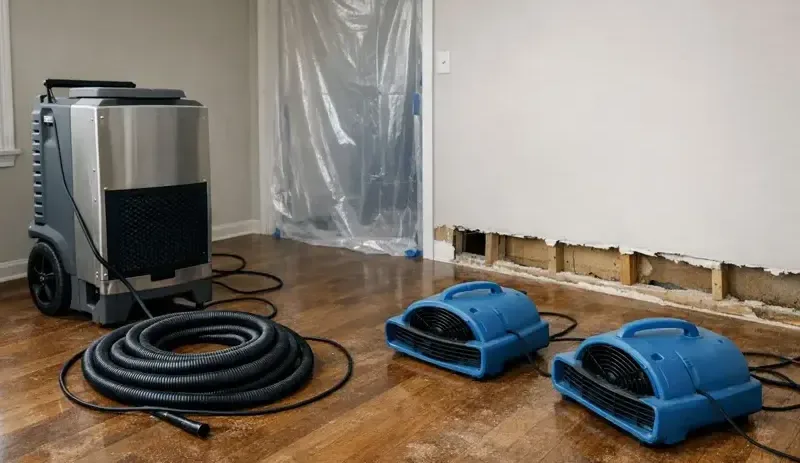
After the water is out, wet framing and subfloors still hold moisture. Dehumidifiers and air movers pull it out while meters track the progress to the dry goal. The crew pulls equipment only when the numbers are right.
(888) 527-9134Damp walls after cleanup? Call now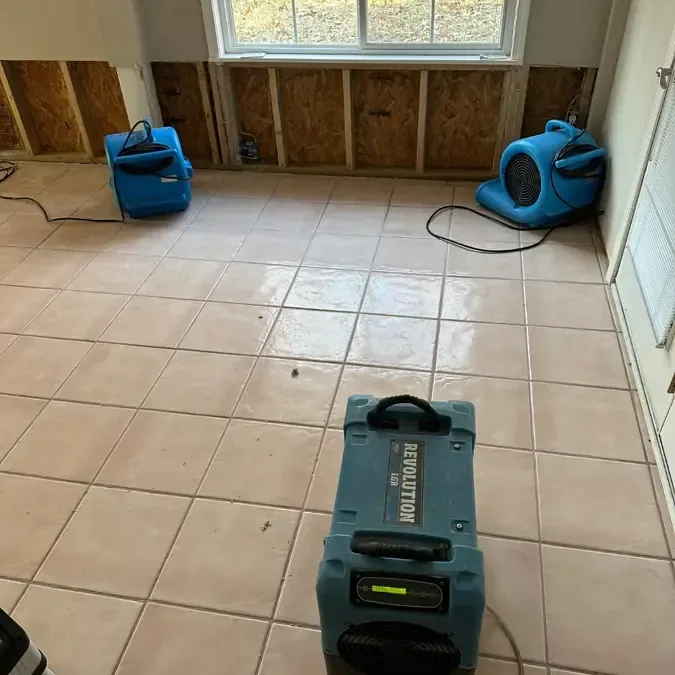
Meters and thermal cameras show which walls, floors and framing are wet.
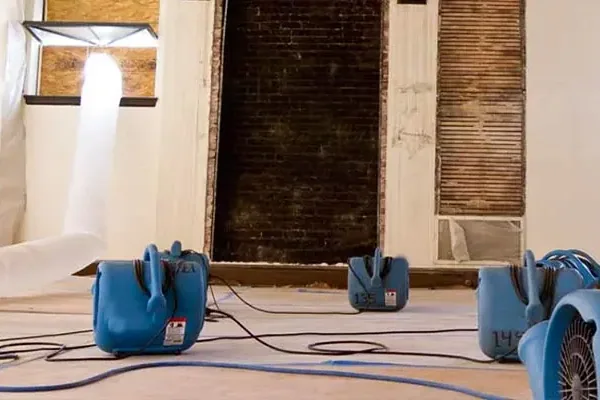
Wall bases and low drywall are opened where trapped water cannot dry on its own.
Air movers and dehumidifiers are positioned from the moisture map.
Readings are taken each visit until every material reaches its dry goal.
Readings across walls and floors show the true wet area, not just the visible stain.
Air movers and dehumidifiers are placed to dry the framing and subfloor evenly.
Wall cavities and toe kicks are opened or vented so trapped water can leave.
Daily checks adjust equipment and confirm when drying is finished, so no machine runs longer than needed.
Structural drying generally costs $1,500 for one or two rooms to $20,000 for a Class 4 slab and hardwood job. The number of rooms, material type and equipment days decide the cost. The size of the wet area, the thickness of the framing and the days of equipment shape the figure, and rebuild work after drying is quoted separately.
Ranges are typical, not a quote: the water category, the square footage, the material class and how fast drying started move the number most. For a planning figure on your own loss, try the water damage cost calculator.
The crew measures moisture across materials so equipment goes where the water is before any equipment is placed.
Hidden cavities are opened or vented so air can move across wet surfaces, which helps trapped water escape.
Dehumidifiers and air movers run steadily while readings are checked on each visit and the crew adjusts the layout as walls dry.
Equipment is pulled only after all readings reach the dry goal and the file is closed with a final report.
Structural drying is the part of water damage work that happens after pumping and removal. Dehumidifiers pull water from the air, air movers push dry air across wet surfaces, and meters tell the crew when materials have reached their dry goal. The goal is to finish with every board, panel and joist at a normal moisture content instead of leaving damp spots behind walls.
Wood, drywall and concrete each hold water differently, so drying is tracked with readings rather than by feel. The crew sets a dry goal for each material and records progress each visit. Equipment is adjusted as walls dry, and removed once every reading is at its target. Gaps behind cabinets and under stairs are checked too, since trapped air in those spots dries last.
Thick framing, hardwood and concrete dry slowly, while thin drywall and carpet dry faster. Humidity, the number of rooms and the amount of wet material all change how long equipment stays. Opening wall bases helps air reach trapped water. Class 4 situations, such as soaked hardwood, concrete or plaster, need low-grain equipment or drying panels and run longer than a simple carpet job.
Daily logs show when equipment ran and what each reading was. Your own insurer can explain how equipment days and monitoring fit your policy. Equipment days, moisture maps and final readings go into one record, so the adjuster can match the time the machines ran to the size of the loss.
The drying crew covers all of ZIP 75409, from The Villages of Hurricane Creek to homes near US 75 and the older structures downtown near the depot. Each street in the ZIP is served the same way.
The same service nearby: structural drying in Princeton, Melissa, Fairview.
This town's water damage hub · every town coveredMost jobs take several days, depending on the materials and the amount of water. Readings, not the calendar, decide when it is done.
Fans move air but do not remove moisture from it. Dehumidifiers are needed to actually pull water out of the building.
Yes, it hums and blows, but it is running to protect the house. Crews place it to dry efficiently while limiting disruption.
Often at the base, so trapped water can escape. A moisture reading tells the crew which walls need opening.
The crew compares readings to the dry goal for each material and logs the final numbers.
Many policies cover drying after a covered loss. Your own insurer can explain how equipment days are handled.
Class 2 involves a larger area of wet carpet, pad and walls, while Class 4 involves dense materials such as hardwood, concrete or plaster that hold water deeply and need special equipment.
Water left in framing and subfloors keeps causing damage. Controlled drying with readings is the way to finish the job.