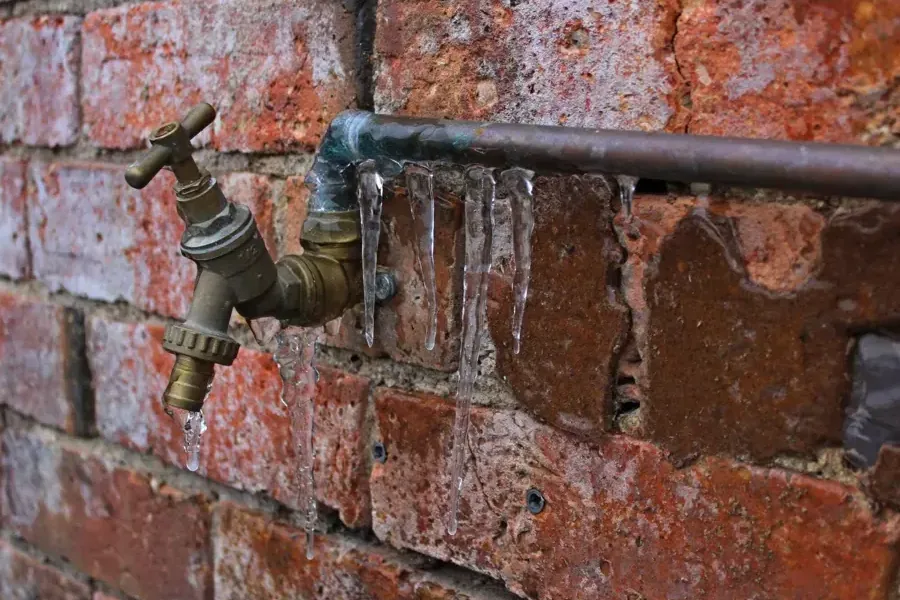
A frozen pipe often does its harm quietly. Ice can split a pipe while it is frozen, yet the water only pours out once the temperature rises and the ice melts. Wylie saw this pattern in February 2021, when record cold, snow and ice caused power outages and frozen water pipes.
Key takeaways
- In the February 2021 winter storm, record cold, snow and ice caused power outages and frozen water pipes in Wylie.
- On February 18, 2021, residents displaced by the weather sheltered at a Wylie junior high school.
- A pipe can split while frozen and leak only when it thaws.
- Knowing where the main shutoff is saves time when water starts flowing.
- Drying starts with extraction, then moisture mapping of walls, ceilings and floors.
What Happened in February 2021
The February 2021 winter storm brought record cold, snow and ice to Wylie. Power outages left many homes without heat while temperatures stayed low.
On February 18, 2021, residents who were displaced by the winter weather sheltered at a Wylie junior high school. Homes left empty or unheated were the ones most at risk of a leak when the weather warmed.
Why a Freeze Leak Waits for the Thaw
Water expands as it turns to ice, and that pressure can split a pipe or crack a fitting. While the ice stays solid, it can plug the opening.
When the ice melts, water pushes through the split. That is why a house can look fine in the cold and flood on the first warm day.
Homes left empty during an outage or a trip face the biggest risk, because nobody is there to notice the first drip or close the valve.
- Ice plugs a split until the temperature rises.
- Water then pours into the wall or ceiling where the pipe sits.
- The flood can run for a long while if nobody is home.
Signs a Pipe Has Frozen or Split
Wylie winters are described as cold, mild and rainy, so most freezes are short. Even a short freeze can harm pipes in attics, exterior walls and garages.
While the pipe is still frozen
A faucet that runs as a trickle or not at all is the first clue. Frost on an exposed pipe, or a bulge in the pipe, points to ice inside.
As the thaw begins
Dripping from a ceiling, a wet wall or the sound of running water behind drywall means a pipe has split. Act at once and shut off the main supply.
What to Do When the Water Starts
Speed matters, because a split pipe in an attic or wall can release a large volume of water.
Once the water is off, a crew can begin extraction and map the damage. A plumber then repairs the split pipe so the drying work is not undone by another leak.
- Close the main shutoff valve.
- Open faucets to drain any water left in the pipes.
- Keep clear of rooms with sagging ceilings or water near outlets.
- Photograph damage and note the time the water was found.
- Do not use open flames to thaw any frozen pipe.
What Power Outages Do to a House
The February 2021 storm brought power outages along with record cold. Without heat, the temperature in an attic, garage or exterior wall falls well below the temperature in the living area.
Pipes in those spaces are the first to freeze, and the ones that split often sit behind finished walls where nobody sees them.
When a pipe split inside an attic, water often travels across the insulation before it drops through a ceiling, so the damage can be wider than the first stain suggests.
- Attic supply pipes above insulation.
- Pipes along exterior walls on the north side.
- Garage pipes and water heater connections.
- Outdoor spigots and irrigation connections.
A Checklist After a Freeze Has Passed
Once the weather warms, a short inspection can catch a leak before it grows. Walk through the house and look at each area where pipes run.
The two problems also overlap in the way they are dried. Whether the water came from a freeze or a failed fitting, the steps are the same: stop the source, extract the water, map the moisture and dry the structure.
- Check ceilings and walls for new stains or soft spots.
- Look under sinks and around the water heater for moisture.
- Watch the water meter for movement with all fixtures off.
- Listen for running or dripping behind walls.
- Photograph anything unusual with the date.
How Freeze Damage Is Dried
The water is extracted first, with attention to attics, ceilings and wall bases. Moisture readings then show where the water traveled and which materials are too wet to keep.
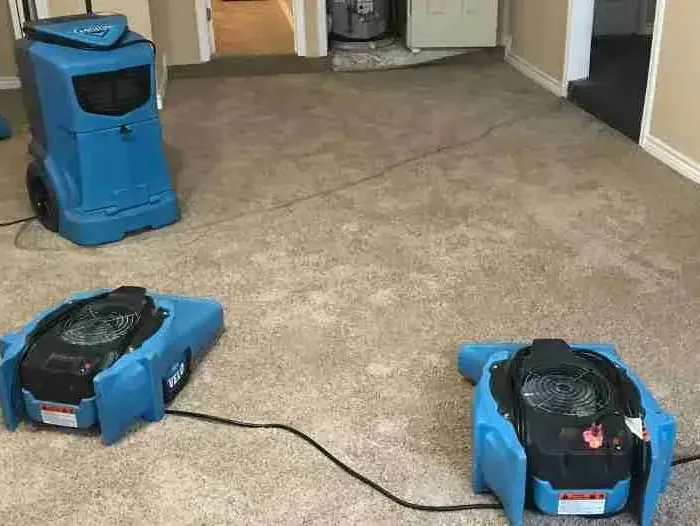
A crew handling frozen pipe water damage removes wet insulation and soaked drywall, then sets air movers and dehumidifiers to dry the rest. Readings are rechecked at each visit until the structure matches a dry reference spot.
- Extract water from floors, attic insulation and ceilings.
- Map moisture with a meter and thermal camera.
- Remove wet insulation and drywall that will not dry.
- Run drying equipment and recheck on a schedule.
Burst Pipes Versus Frozen Pipes
A burst pipe is the end result, and a frozen pipe is the early stage. The burst pipe water damage page covers a break that happens without a freeze, such as a failed fitting.
Both need the same fast response, since water in a wall or ceiling spreads in every direction.
Getting Ready for the Next Cold Snap
A freeze can return in any winter, so a short list of habits helps. Leaving a trickle of water at a faucet on an exterior wall, opening cabinet doors to warm pipes and knowing where the main shutoff sits all cut the risk.
The Wylie page lists the other water problems that homes here deal with, including storm water and roof leaks.
Walking the house in early fall, before the first cold night, is the easiest time to add insulation and cover spigots.
- Insulate exposed pipes in attics, garages and exterior walls.
- Disconnect hoses and cover outdoor spigots.
- Keep the house heated to a safe level when away.
- Know the main shutoff and teach everyone in the household.
Questions
Why did the leak start after the freeze ended?
Ice can plug a split pipe. When it melts, water runs through the opening.
What is the first thing to do if water is flowing?
Shut off the main supply valve, then open faucets to drain what remains in the pipes.
Can a frozen pipe be thawed safely?
Gentle warmth works, but an open flame does not. If a pipe is already split, thawing it will release water.
Do all frozen pipes burst?
No. Some freeze and thaw without splitting, but any pipe that froze should be checked.
How long does drying take after a freeze leak?
It depends on how far the water traveled and what it soaked into. Readings at each visit decide when equipment can be removed.
Why do power outages raise the risk of frozen pipes?
Without heat, attics, garages and exterior walls get much colder than the living area, and pipes in those spaces freeze first.