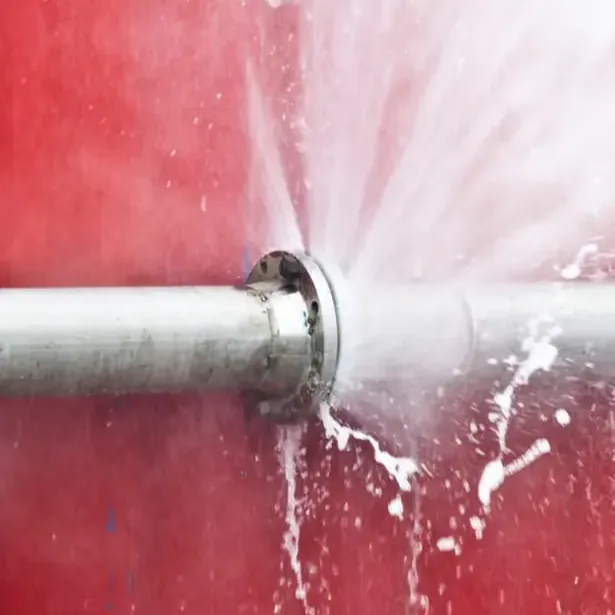
A burst pipe turns a quiet house into a flood in a short stretch of time. Melissa has grown fast, and many homes here are newer subdivision builds, so the first big water event for a family often arrives well before they have a plan. This post covers where breaks usually happen, what to shut off and how the damage is handled.
Key takeaways
- The city states its system has no lead service pipes and no galvanized service pipes requiring replacement, so a break is more likely on the house side of the meter.
- Shutting off the main valve is the single most useful step in the first moments.
- Water follows framing, so a break in one wall can wet rooms on both sides and the ceiling below.
- Extraction, selective wall opening and drying equipment are done in that order.
- Utility Billing has a Leak Adjustment Policy, and sewer bills use Winter Quarter Averaging of December, January and February readings.
Why Breaks Tend to Happen Inside the House
The City of Melissa says its distribution system has no lead service pipes and no galvanized service pipes requiring replacement. That is good news for the supply side, and it also means a sudden break is more likely to be somewhere inside the home.
The water and wastewater division maintains valves, fire hydrants and customer water meters, so the city side of the meter is its work. Anything past the meter is the property owner's to handle.
- Supply pipes inside walls and ceilings.
- Connections at the water heater, toilets and sinks.
- Hoses at the washer, dishwasher and refrigerator.
- Outdoor spigots and irrigation tie-ins at the house.
A Fast-Growing City With Many First-Time Water Events
Melissa went from 4,695 residents in 2010 to 13,901 in 2020. Most of its residential growth is newer single-family subdivisions, with older acreage properties that came before them.
Liberty and Legacy Ranch are newer-construction subdivisions in the south part of the city, and homes in The Quarry were built in the 2010s. Older acreage homes may differ in layout, so the path water takes can change from one house to the next.
The First Steps When a Pipe Lets Go
The shortest path to less damage is to stop the water at the source and protect what is still dry.
- Open a faucet at the lowest point in the house to drain remaining pressure.
- Move furniture, rugs and electronics out of the wet area.
- Photograph the damage before anything is changed.
Stop the flow
Find the main shutoff valve and turn it fully closed. If the valve is stuck or cannot be reached, shut off the supply at the meter if it can be done safely and call the city.
Protect people and power
Keep everyone out of rooms where water is near outlets or light fixtures. If a ceiling is sagging with trapped water, stay clear of the area beneath it.
How the Water Is Removed and the Wall Is Opened
A crew providing burst pipe water damage help starts by extracting standing water from floors. Moisture readings then show where water went inside walls and ceilings.
The wall is opened only where the readings call for it. A small, clean cut allows airflow into the cavity while saving as much finished drywall as possible.
Fast emergency water removal matters because wet drywall, insulation and baseboards begin to degrade when they stay damp.
- Standing water is pumped or extracted from the floor.
- Thermal imaging and a moisture meter map the wet walls.
- Baseboards and low drywall are removed where readings stay high.
- Wet insulation is bagged out and replaced after drying.
How Drying Equipment Is Placed
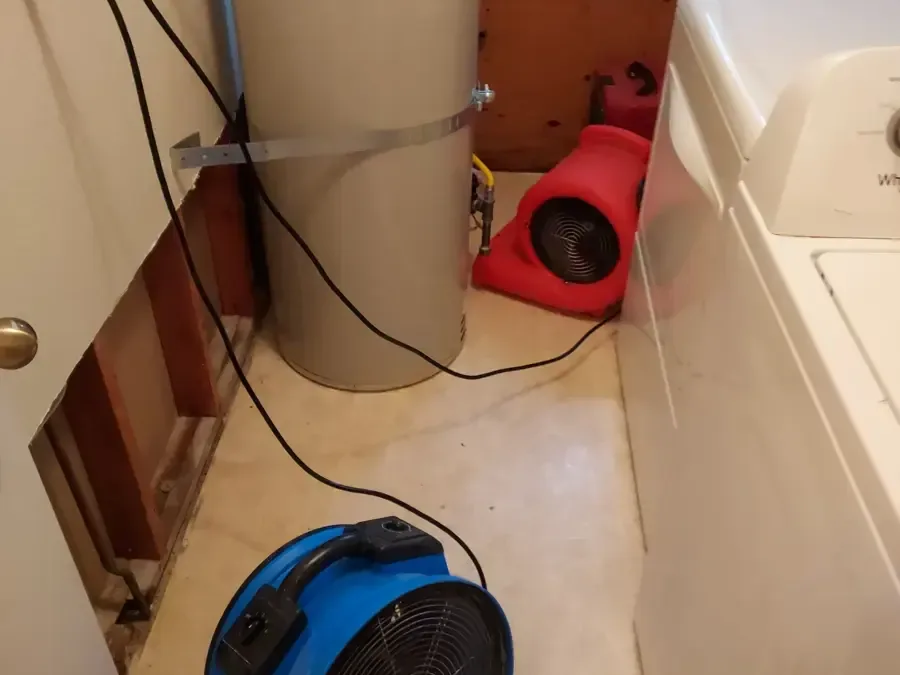
Air movers push dry air across surfaces and into open wall cavities, while dehumidifiers pull moisture out of the room. In a house that stays closed during drying, the equipment is placed to keep the air moving along the walls.
Readings are taken at each visit and compared with a dry reference spot. Equipment stays until the framing and flooring match it, and the burst pipe water damage page explains what the records look like.
Water Bills, Leak Adjustments and Record-Keeping
A burst pipe can show up on the next water bill as a sudden jump in use. Utility Billing manages water, sewer and solid waste billing and has a Leak Adjustment Policy, so it is worth asking how it applies.
Sewer bills use Winter Quarter Averaging of December, January and February meter readings. A homeowner should ask the city how a leak in another season is treated and keep the plumber's repair invoice.
- Save the plumber's invoice and the date of the repair.
- Keep photos and the cleanup crew's moisture records.
- Contact Utility Billing about the Leak Adjustment Policy.
- Notify the insurance company before major repairs begin.
Hidden Damage to Watch For After a Break
A burst pipe in a wall rarely wets just one spot. Water runs down the cavity, soaks the bottom plate and slips under flooring on both sides.
Cabinets, door casings and baseboards are common victims. The damage can look minor at the surface and still be wet underneath.
- Paint that bubbles or peels above a baseboard.
- Flooring that cups, lifts or feels soft underfoot.
- Cabinet bases that swell or darken at the bottom.
- A damp smell in a closet or room that shares the wall.
Water Heaters, Hoses and Other Weak Points
Not every sudden leak is a split pipe. Water heater connections, ice maker tubing and washer hoses fail in much the same way and wet the same materials.
A quick walk through the house twice a year, looking at each connection, catches many problems early. The same drying steps apply whatever the source.
Deciding What to Repair First
Once the water is out and the structure is drying, the order of repairs matters. A plumber closes the leak, the crew finishes drying, and only then do drywall, paint and flooring go back.
Rushing the finish work over damp materials sets up a second round of damage, so readings are checked before anything is closed up.
Preparing the Household for the Next Time
A little planning turns a panic into a routine. Every adult in the house should know where the main valve is and how to close it.
The Melissa page lists the water problems that homes here commonly deal with, from supply breaks to storm water.
Questions
Where is the main shutoff in most homes?
It is usually near the water heater, in a utility room, in the garage or at an outside wall. Finding it before an emergency saves a lot of damage.
Is the city responsible for a break inside the house?
The city maintains valves and customer water meters. A break on the house side of the meter is the property owner's to repair.
Do all burst pipes require opening a wall?
Not always. Moisture readings decide, and a small access cut is made only where the cavity stays wet.
How is a burst pipe different from a slow leak?
A burst releases a large volume suddenly, while a slow leak wets materials over weeks. Both need drying, but a burst usually needs extraction first.
Can a leak affect a water bill?
Yes. Utility Billing has a Leak Adjustment Policy, so the city can explain how a repaired leak is handled.
Should a burst pipe be repaired before drying starts?
The leak must be stopped first, since drying cannot get ahead of running water. Drying then begins before the finish work.