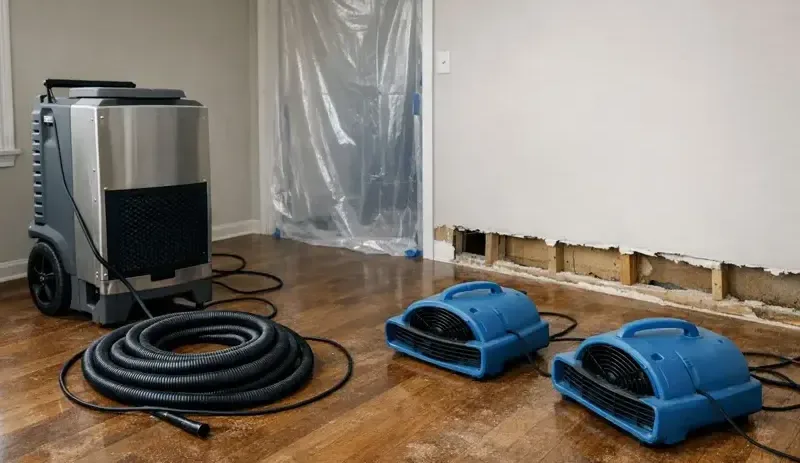
A leak in a wide one-story house behaves differently from a leak in a two-story home. Water has no stairs to stop it, so it keeps moving across flat floors. Heritage Ranch, the gated 55+ golf community in northern Fairview, is full of homes with that floor plan.
Key takeaways
- Heritage Ranch homes are mostly single-story brick and stone, built from the early 2000s to the mid-2010s.
- A long, open floor plan lets water travel to rooms far from the source before a stain appears.
- Hardwood floors, found in many of these homes, swell and cup if they stay wet.
- Extraction comes first, then moisture mapping, then drying equipment sized to the whole footprint.
- Covered patios and door thresholds are common water entry points in a single-story design.
What Makes a One-Story Floor Plan Different
Heritage Ranch is built around an 18-hole golf course with ponds and greenbelts. The homes are mostly single-story brick and stone, and many have hardwood floors and covered patios.
In a house with one level, the whole floor sits on the same plane. A leak that begins near the kitchen can reach a bedroom hall without ever finding a step or a drop.
- No upper floor means every leak lands directly on finished flooring.
- Wide halls and open rooms give water a long path to follow.
- Brick and stone exteriors hide small leaks at doors and windows.
Where the Water Usually Starts
Water enters a home like this from several directions. The location often decides how far it travels.
Inside the walls and under fixtures
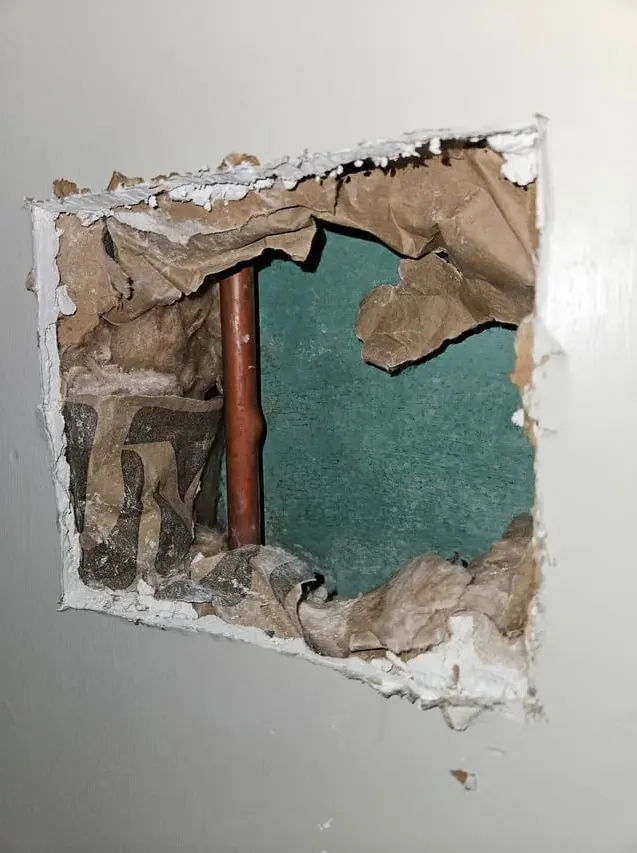
Supply pipes, water heater connections and appliance hoses can leak slowly behind walls. The water follows the framing and the floor until it finds a low spot.
Doors, patios and the roof edge
Covered patios keep rain off the floor, but a patio door threshold can still let water in during a heavy storm. Hail and wind reports in the area, mostly in March and April, can also open the roof to leaks.
Why Hardwood Floors React Quickly
Hardwood absorbs water through the seams and the underside of each board. As the boards take on moisture, they swell, lift at the edges and cup.
Floors that stay wet for days may need replacing, while floors dried early can often be saved. That is why the first steps matter.
- Mop or extract surface water right away.
- Lift rugs and furniture legs off the wet wood.
- Run the air conditioning to keep humidity low while help is on the way.
- Avoid heat guns or space heaters on wet boards.
How Extraction and Drying Are Sequenced
A crew starts with emergency water removal to pull standing water off the floor. Specialized mats and tools can draw water from between hardwood boards without tearing them up.
Next, moisture meters and a thermal camera map the damp area. In a wide single-story plan, the map often shows a larger footprint than the visible wet patch.
The drying plan then follows the map, with air movers aimed along the floor and dehumidifiers sized to the whole area. The structural drying page explains the readings that decide when equipment can come out.
Getting Ready as a Resident of a 55+ Community
The median age in Fairview was 49.0 at the 2020 census, and 29.9 percent of residents were 65 or older. For many homeowners, safety and ease are as important as speed.
A few simple steps make it easier to handle water trouble without climbing, lifting or rushing.
- Know where the main water shutoff is and mark it clearly.
- Keep a flashlight and a list of key contacts near the entry.
- Ask a neighbor or family member to check in during storms.
- Store important papers off the floor and on a higher shelf.
Water Heater and Appliance Leaks in a Large Home
In a big single-story house, the water heater, laundry room and kitchen can sit far apart. A slow leak at one of them may run along a hallway and show up in a spot that seems unrelated.
Tracing the source takes a moisture meter and patience. The wet area usually forms a path that leads back to the start.
- Check the floor around the water heater and washer on a regular schedule.
- Watch for hardwood boards that lift in a row from a wall.
- Notice a baseboard that looks darker or feels soft near the bottom.
- Listen for faint dripping inside walls when the house is quiet.
Hail, Wind and Roof Leaks Above Wide Roofs
A wide single-story house has a lot of roof for its size. Hail was reported in the Fairview area on 66 days between 2006 and today, most often in April and March, and a 76 mph measured wind gust was reported on March 4, 2025.
On March 25, 2025, hail of 2.25 inches was reported across Parker, Forest Grove and Fairview. Roofs that take hits like that can leak into an attic and then into a ceiling, as covered on the roof leak water damage page.
Because the ceilings in a one-story home sit directly under the roof deck, even a small leak can reach finished surfaces fast.
Working With the Town and the Neighborhood
Town of Fairview staff handle permitting, building inspection and code enforcement, and town permit staff verify contractor registration when checking permit applications. Anyone planning a major repair after water damage can ask the town which permits apply.
The Fairview service page lists the water problems that homes here deal with and links to each service.
Questions
Why does water travel so far in a single-story home?
The floor is one continuous level, so water has no stair or step to stop it. It follows the lowest path across halls and rooms.
Can wet hardwood floors be saved?
Often yes when water is removed early and drying equipment runs promptly. Floors that stay wet for days may cup or buckle beyond repair.
What is the first thing to do after finding water?
Stop the source if it can be found, then lift rugs and items off the floor and photograph the damage. A crew can then extract the water.
Does a covered patio prevent water entry?
It keeps rain off the floor, but door thresholds and nearby roof edges can still let water in during heavy storms.
Do repairs after water damage need a permit?
That depends on the work. The Town of Fairview handles permitting and verifies contractor registration, so a quick check with town staff clears it up.
Why does a leak in one room sometimes show up in another?
Water follows framing, floors and wall bases, so it can surface far from the source. A moisture map shows the real path.